
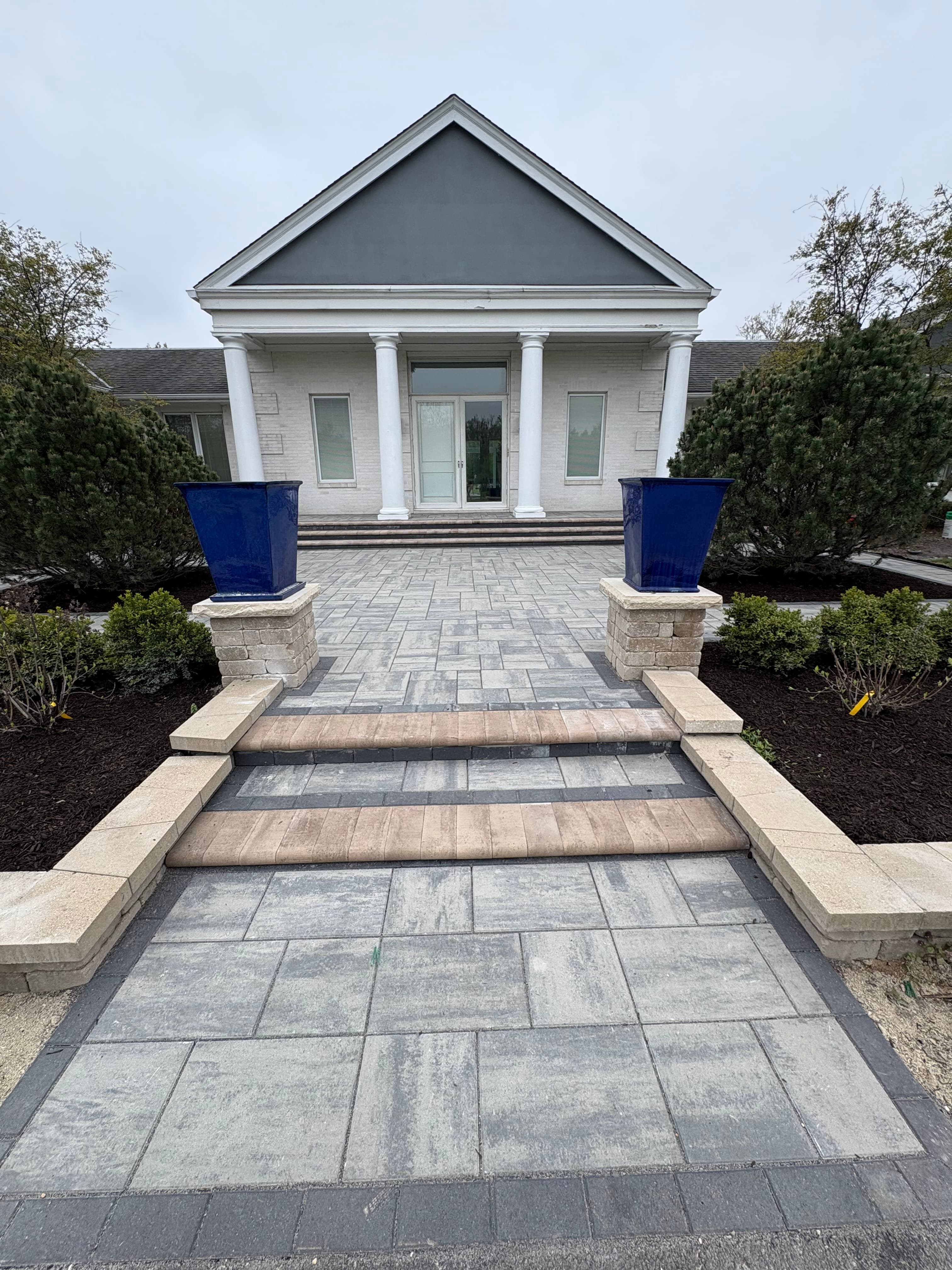
Hardscaping
Driveway Pavers
Paver driveway installation as a durable, attractive alternative to asphalt or poured concrete.
Asphalt driveways need sealing every few years and eventually crack. Poured concrete handles freeze-thaw cycles poorly and tends to crack along expansion joints or where ground movement occurs. Paver driveways have one advantage neither option can match: individual pieces can be pulled up and reset if a section settles or a utility line needs access. You're never patching or living with a visible repair.
Driveways carry more load than patios, so the base requirements are more demanding. We typically excavate 12 to 14 inches for a driveway and use a heavier compacted gravel base to handle vehicle weight without movement over time. The pavers themselves are thicker — 2.375 inches as a standard for vehicle areas rather than the thinner pavers used for pedestrian applications.
Paver driveways also handle Chicagoland winters better than concrete: the flexible joint system allows for ground movement without cracking the surface. Polymeric sand joints keep the installation tight and resist the freeze-thaw cycling that damages poured surfaces.
What You Get
- Thicker pavers (2.375") and deeper base (12–14") for vehicle load
- Individual pavers can be reset without visible patching
- Handles freeze-thaw cycles better than poured concrete
- Polymeric sand joints keep the surface tight through winter
- Wide selection of paver styles and colors
- Long service life — properly built paver driveways last 30+ years
How It Works
Free Estimate
We visit the property, measure, and discuss the project. You get a written quote within 48 hours.
Planning & Scheduling
We confirm the scope, agree on a start date, and handle any material sourcing before the job begins.
Installation & Cleanup
Cesar and his crew complete the work. All debris is hauled off-site and the area is left clean.
Common Questions
Why are the base requirements deeper for a driveway than a patio?
Vehicle weight is significantly greater than foot traffic. A deeper, heavier-compacted base prevents the pavers from shifting or sinking under the repeated load of cars and trucks.
How do paver driveways handle Chicago winters?
Better than concrete. Concrete cracks when frost heave moves the ground underneath it. Pavers flex slightly with ground movement — individual pieces may shift marginally, but the surface doesn't crack. Any shifted pavers can be reset without patching.
Can I repair just part of a paver driveway?
Yes. That's one of the main advantages. Concrete and asphalt repairs are always visible. With pavers, you pull up the affected section, address what's underneath, and reset the same pavers. Done well, the repair is nearly invisible.
How do I maintain a paver driveway?
Occasional reapplication of polymeric sand to the joints every few years, and sealing if you want to maintain the original color. Otherwise, pavers are low-maintenance.
Related Services
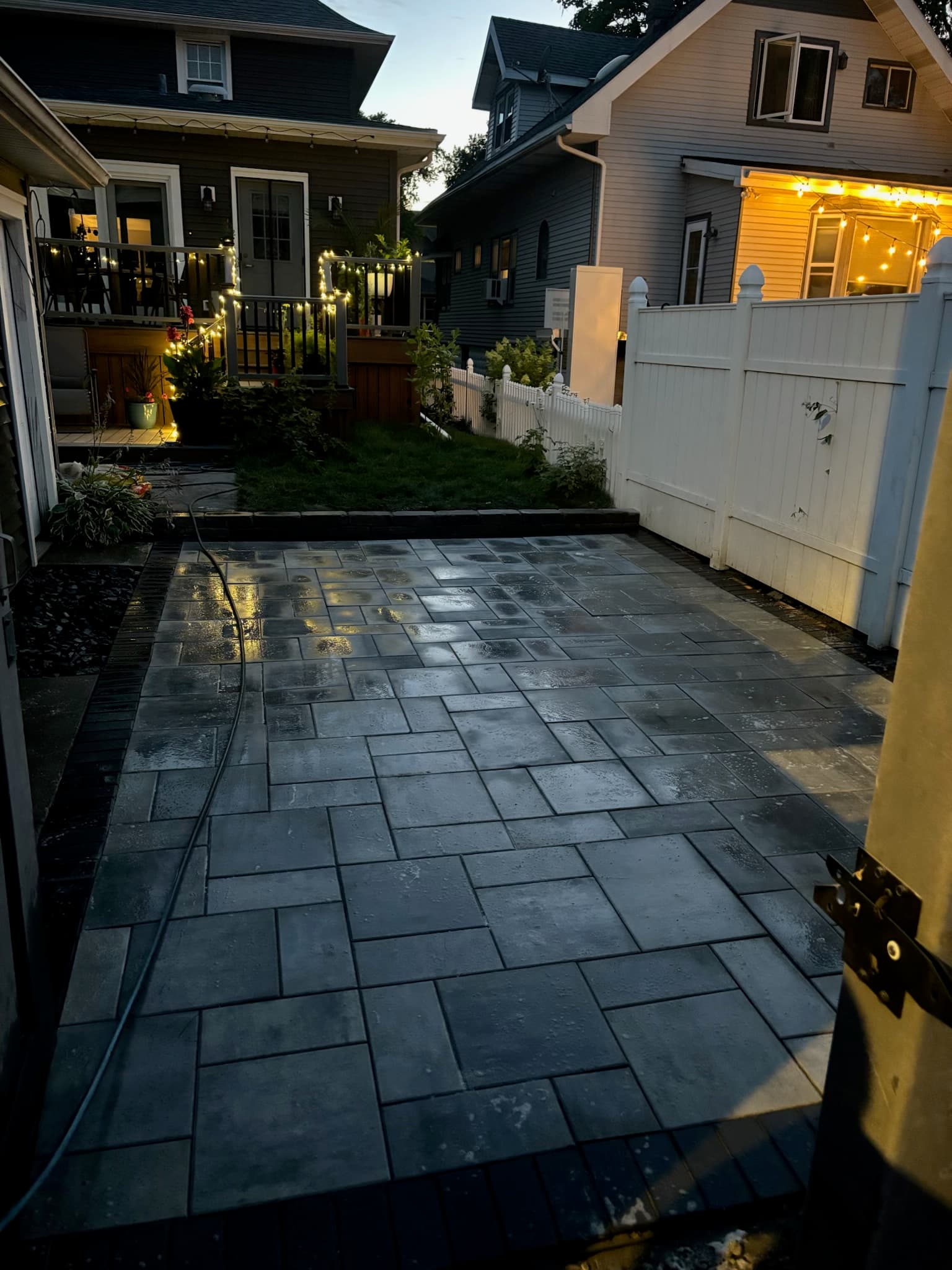
Paver Patios
Custom paver patio installation built on a proper compacted base — built to last through Chicago winters without settling.
Learn More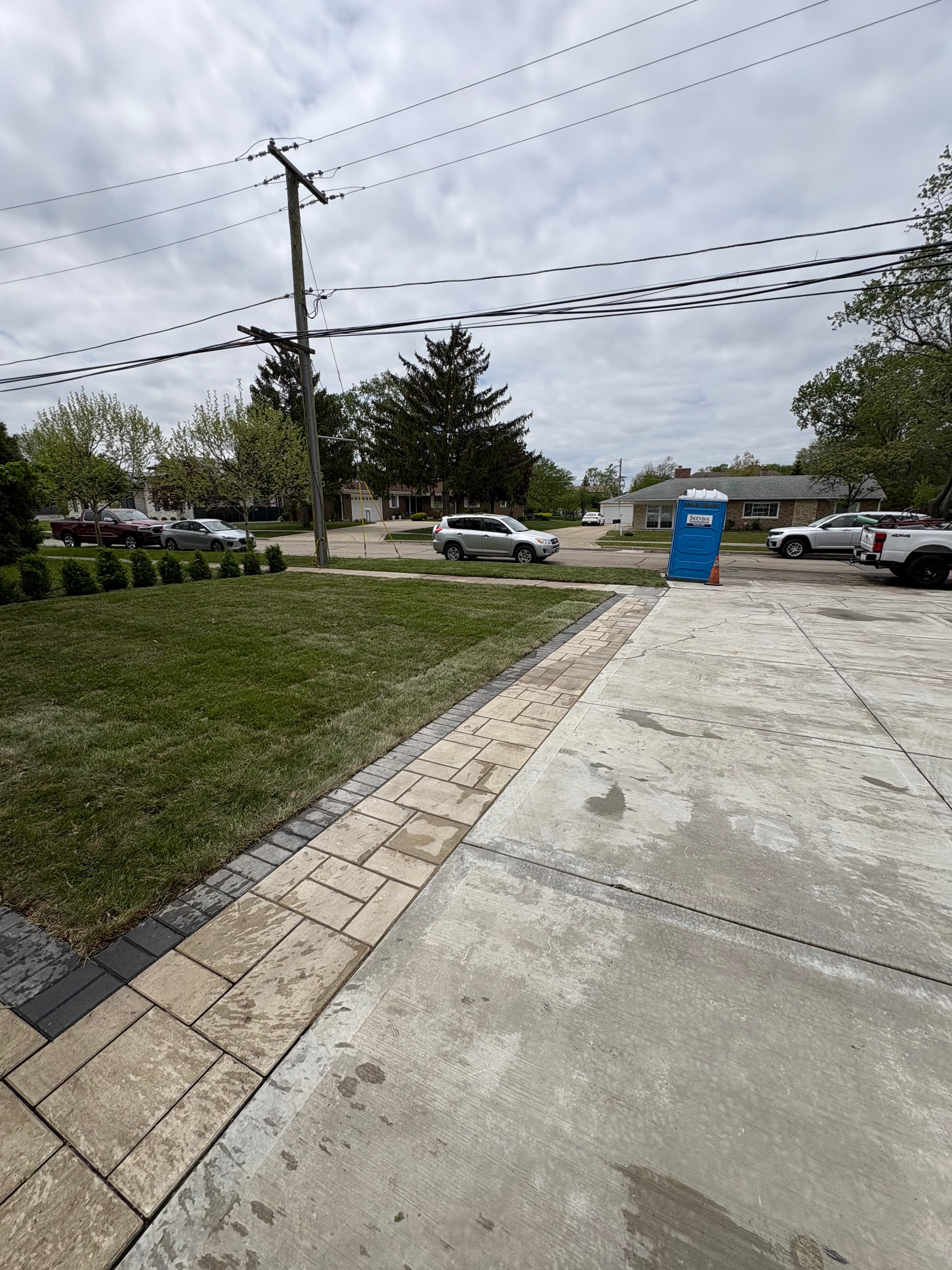
Stone Patios
Natural stone patio installation using flagstone, bluestone, and fieldstone for a handcrafted, one-of-a-kind outdoor space.
Learn More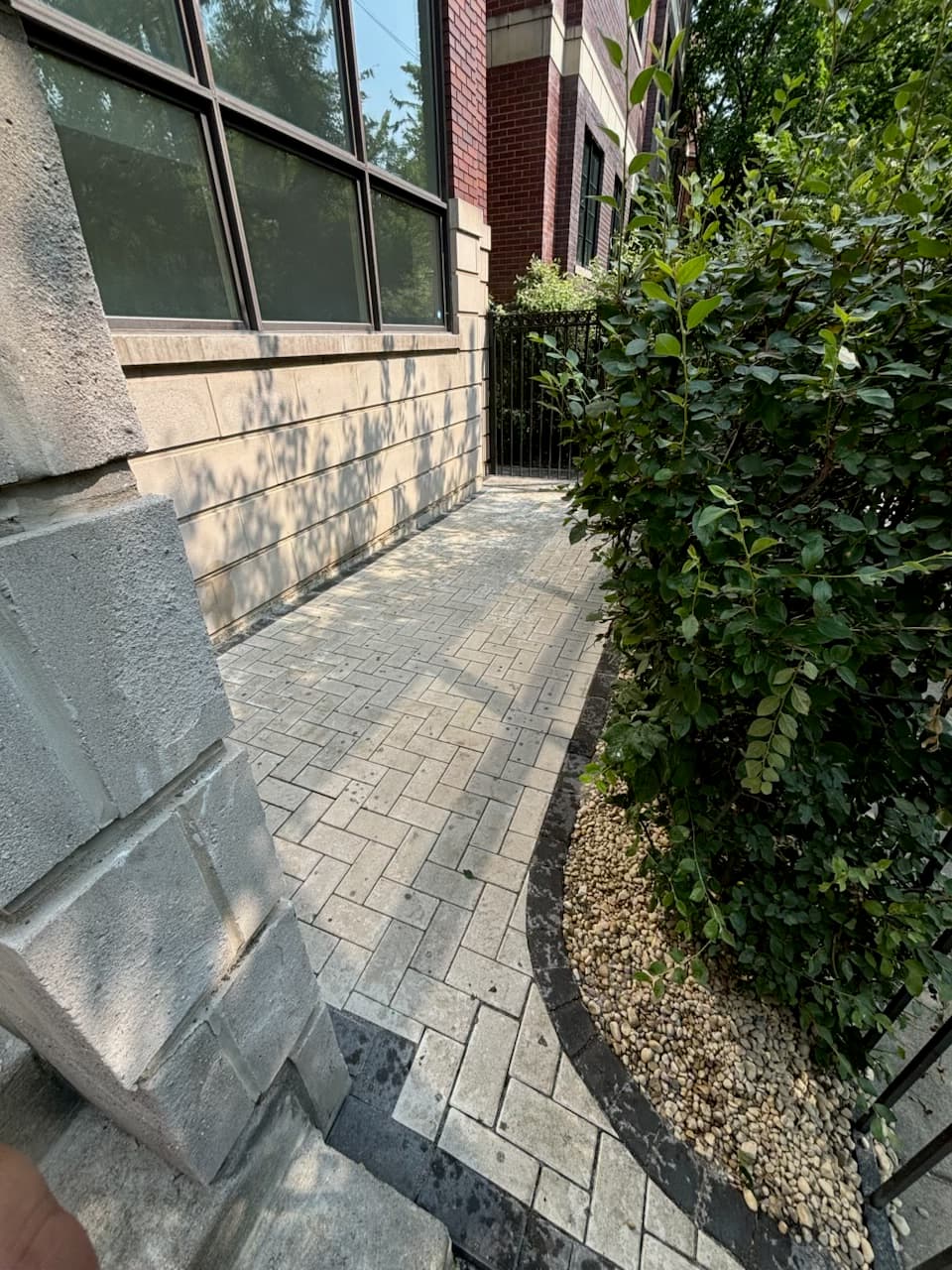
Retaining Walls
Retaining wall installation to control erosion, manage sloped yards, and create usable flat terrain.
Learn MoreReady to Get Started?
Free estimates, no pressure. We serve 50+ cities across Chicagoland and Northwest Indiana.